Articles · Updated
9ct, 14ct, 18ct… the numbers stamped inside rings and on clasps can look like a code. They’re actually one of the simplest things about gold: each one tells you how much of the piece is pure gold. This guide explains what every common UK carat means, how to find it on your own jewellery, and what it does (and doesn’t) say about wear and value.
What a gold carat actually means
Imagine your piece of jewellery divided into 24 equal parts. The carat number tells you how many of those parts are pure gold. The remaining parts are other metals, such as silver, copper, zinc or palladium, mixed in to create an alloy.
Why mix gold at all? Pure gold is very soft. A 24ct ring worn every day would bend and scratch easily. Adding other metals makes it harder and more practical, and the choice of metals also creates the different colours of gold.
24 parts: how much is gold?
9ct · 9 of 24 parts
14ct · 14 of 24 parts
18ct · 18 of 24 parts
24ct · 24 of 24 parts
Gold squares = pure gold; white squares = other metals in the alloy.
The carats you’ll find in UK jewellery
Each carat has its own character. The dots below are a general guide to how well each one stands up to everyday knocks and scratches; how a piece is made and worn matters too.
9ct
375 · 37.5%
Most common in the UK
Chains, signet rings, earrings and everyday pieces. Hard-wearing and affordable. Its paler colour comes from the larger share of other metals.
Everyday toughness ●●●●○
14ct
585 · 58.5%
Often from abroad
Less traditional in Britain but common in European and American jewellery. Only an official UK standard since 1932, so older British pieces are rarely 14ct.
Everyday toughness ●●●●○
18ct
750 · 75%
Fine jewellery
Engagement rings, wedding bands, quality watches. Richer colour, a little softer than 9ct, so it can show scratches sooner.
Everyday toughness ●●●○○
22ct
916 · 91.6%
Sovereigns & heirlooms
Gold sovereigns, older wedding rings and much South Asian and Middle Eastern jewellery. Deep yellow and noticeably soft.
Everyday toughness ●●○○○
24ct
999 · 99.9%
Bars & bullion
Investment bars and some coins. Rarely used for jewellery because it is so soft; it dents and scratches easily.
Everyday toughness ●○○○○
How to find the carat on your own gold
In the UK, gold is usually marked with a three-digit fineness number showing parts of pure gold per 1,000. Look on the clasp of a chain, inside a ring band or on the back of a pendant; a magnifier helps. Our guide on reading UK gold hallmarks and checking gold at home shows the full set of marks to look for.
| Mark | Carat | Pure gold |
|---|---|---|
| 375 | 9ct | 37.5% |
| 585 | 14ct | 58.5% |
| 750 | 18ct | 75% |
| 916 | 22ct | 91.6% |
| 990 | just under 24ct | 99% |
| 999 | 24ct | 99.9% |
You may also come across “K” instead of “ct” (14K, 18K). That’s the American spelling, “karat”, and means exactly the same thing. Pieces bought abroad can carry other marks, such as 10K or 333; our gold and silver terminology guide explains those.
No mark at all? Very small items (under 1 gram of gold) don’t have to be hallmarked in the UK, and older or repaired pieces sometimes lose their marks. An unmarked item may still be gold; a test is the only way to know.
Carats and value: why weight matters just as much
The value of the gold in a piece comes from how much pure gold it contains, and that depends on both carat and weight. A higher carat means more gold per gram, but a heavier piece of a lower carat can still contain more gold overall.
Heavy 9ct chain
20 g
× 37.5% = 7.5 g pure gold
vs
Light 18ct ring
4 g
× 75% = 3 g pure gold
Example weights for illustration. Here the 9ct chain holds more than twice as much gold as the 18ct ring.
The other part of the picture is the current market price of gold, which changes daily. If you’re thinking about selling, our complete UK guide to selling gold explains how an offer is put together and what to check first.
Three common carat mix-ups
“Yellow gold is higher carat than white gold”
Colour comes from the other metals in the alloy, not the amount of gold. Yellow, white and rose gold can all be 9ct or 18ct. Read more in our guide to yellow, white and rose gold.
“Higher carat lasts longer”
It’s often the other way round. Because pure gold is soft, lower-carat alloys such as 9ct usually resist scratches and dents better in daily wear.
“Carat means the same for gold and diamonds”
Not quite. For gold, carat (ct) means purity. For gemstones, a carat is a unit of weight: 0.2 grams. A “1 carat diamond ring” says nothing about the gold in the band.
Why the UK has so much 9ct gold
The UK’s mix of carats has a history. Lower standards were added in the Victorian era, and today 9ct is the most common jewellery gold in Britain.
1854
9ct, 12ct and 15ct gold introduced as legal standards.
1932
12ct and 15ct discontinued; 14ct introduced.
1998
New gold standards introduced to harmonise with Europe.
So if you find a 15ct brooch or a 12ct locket in a family jewellery box, it is very likely to be from before 1932.
Not sure what carat your gold is?
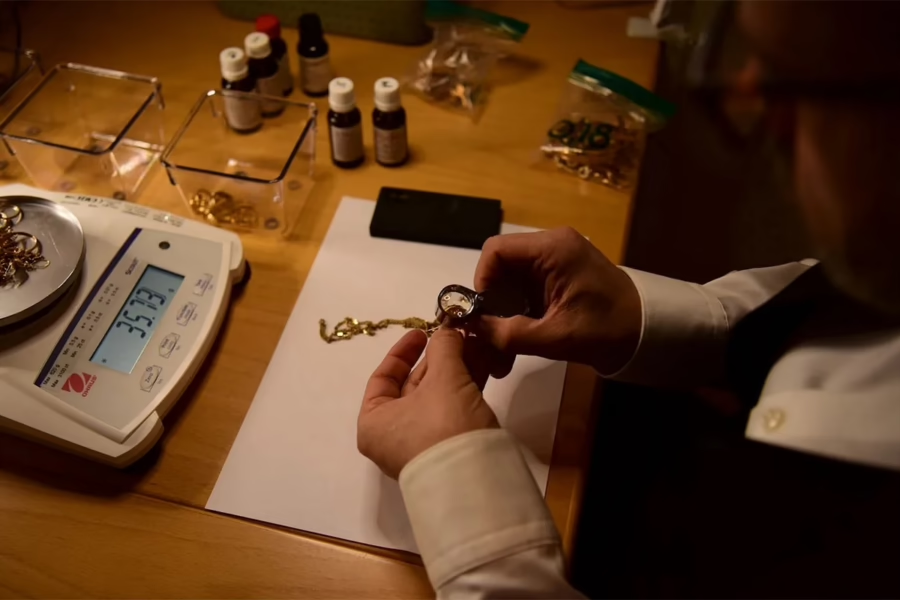
Worn hallmarks, foreign stamps and unmarked pieces are all very common. At a free Gold Arthur valuation, the expert tests each item to confirm its carat and weighs it on a precision scale, all in front of you. You’ll hear what the results mean in plain words.
Appointments are private, take about 15 minutes and happen at a local stopping point near you. Here’s what happens during a gold valuation, step by step.
There is no obligation to sell. If you choose to, payment goes to your bank account no later than the fifth banking day, never in cash.

Frequently asked questions
Is 9ct gold real gold?
Yes. 9ct is a legal UK gold standard and contains 37.5% pure gold. It’s the most widely used jewellery gold in Britain.
What’s the difference between ct and K?
None in meaning. “ct” (carat) is the British spelling, “K” (karat) the American one. 18ct and 18K are both 75% gold.
Why does 14ct show as 585 and not 583?
14 out of 24 is 58.3%, but the official standard is set at 585 parts per thousand, slightly above, so a hallmarked 14ct item always contains at least 14 parts in 24.
Can a piece be gold if it has no hallmark?
It can. Small items under 1 gram are exempt from UK hallmarking, and marks can wear away or be lost in repairs. Equally, some unmarked items turn out not to be gold. Testing is the only reliable way to tell.
Do I have to sell if I bring my gold for a valuation?
No. The valuation is free and you decide afterwards. You’re welcome to simply find out what carat your pieces are and take everything home again.
Sources
- British Hallmarking Council / GOV.UK: Hallmarking guidance notes (fineness standards, 1 g exemption)
- The Birmingham Assay Office: Our story – hallmarking timeline (1854, 1932, 1998)
Information checked on 9 October 2026.