Articles · Updated
Yellow, white, rose, red – gold jewellery comes in many shades, yet every one of them starts with the same metal. The colour comes from what gold is mixed with. Here’s how each shade is made, how they differ in everyday wear, and why the colour of your jewellery doesn’t decide what it’s worth.
WhiteGreenYellowRoseRed
Same gold, different partners: more copper pushes the colour towards red, more silver towards green, and palladium or nickel towards white.
All jewellery gold is an alloy
Pure 24ct gold is too soft for rings and chains that are worn every day. To make it stronger, jewellers mix it with other metals – and those metals also set the colour. The carat tells you how much of the mix is gold: 18ct is 75% gold, 9ct is 37.5% gold. You’ll find the full list of standards in what do different carats mean.
Because 9ct gold – the most common standard in the UK – is less than half gold, the other metals have a bigger effect on its colour. That’s why 9ct rose gold can look noticeably pinker, and 9ct white gold more greyish, than their 18ct versions.
The recipe behind each colour
Here are typical 18ct mixes. Every one contains exactly the same amount of gold – only the remaining 25% changes.
YellowGold 75%+Silver ~12.5%+Copper ~12.5%
WhiteGold 75%+Palladium or nickel ~25%
RoseGold 75%+Copper ~20%+Silver ~5%
RedGold 75%+Copper ~25%
GreenGold 75%+Silver ~25%
Typical examples only – manufacturers use different mixes, sometimes with small amounts of zinc or other metals.
Why white gold turns yellowish
White gold isn’t naturally bright white. The alloy itself is a soft grey or slightly yellow tone, and most white gold jewellery is plated with rhodium to give it that crisp, mirror-like finish. Over years of wear – especially on rings – the rhodium gradually wears away.
When new
Bright, cool white from the rhodium plating.
After years of wear
A warmer, yellowish tone where the alloy shows through.
A yellowish white gold ring is not a sign of poor quality or fake gold – a jeweller can simply re-plate it. If you have white gold you no longer wear, our article got white gold lying around? explains how its value is worked out.
How each colour wears over time
Yellow gold
No plating, so the colour stays even. Lower carats such as 9ct can darken slightly over time.
White gold
Rhodium plating wears with use and can be renewed. Some people react to nickel-based white gold.
Rose & red gold
Copper makes the alloy hard-wearing. The tone can deepen a little with age.
Darker patches on an old 9ct piece don’t mean it isn’t real gold. We explain why in how to tell if gold is real at home.
Value depends on purity, not colour
It’s easy to assume white gold is worth more than yellow, or the other way round. In fact, the gold value of a piece depends only on how much pure gold it contains – its weight and its carat. Colour plays no part.
| Carat | Yellow | White | Rose |
|---|---|---|---|
| 9ct (375) | 3.75 g | 3.75 g | 3.75 g |
| 14ct (585) | 5.85 g | 5.85 g | 5.85 g |
| 18ct (750) | 7.50 g | 7.50 g | 7.50 g |
Scratches, worn plating or a dent don’t change the purity either. A piece worn for decades may have lost a tiny amount of weight, and stones or non-gold parts are not counted as gold – but the colour itself never changes the gold value.
Every colour, valued the same way
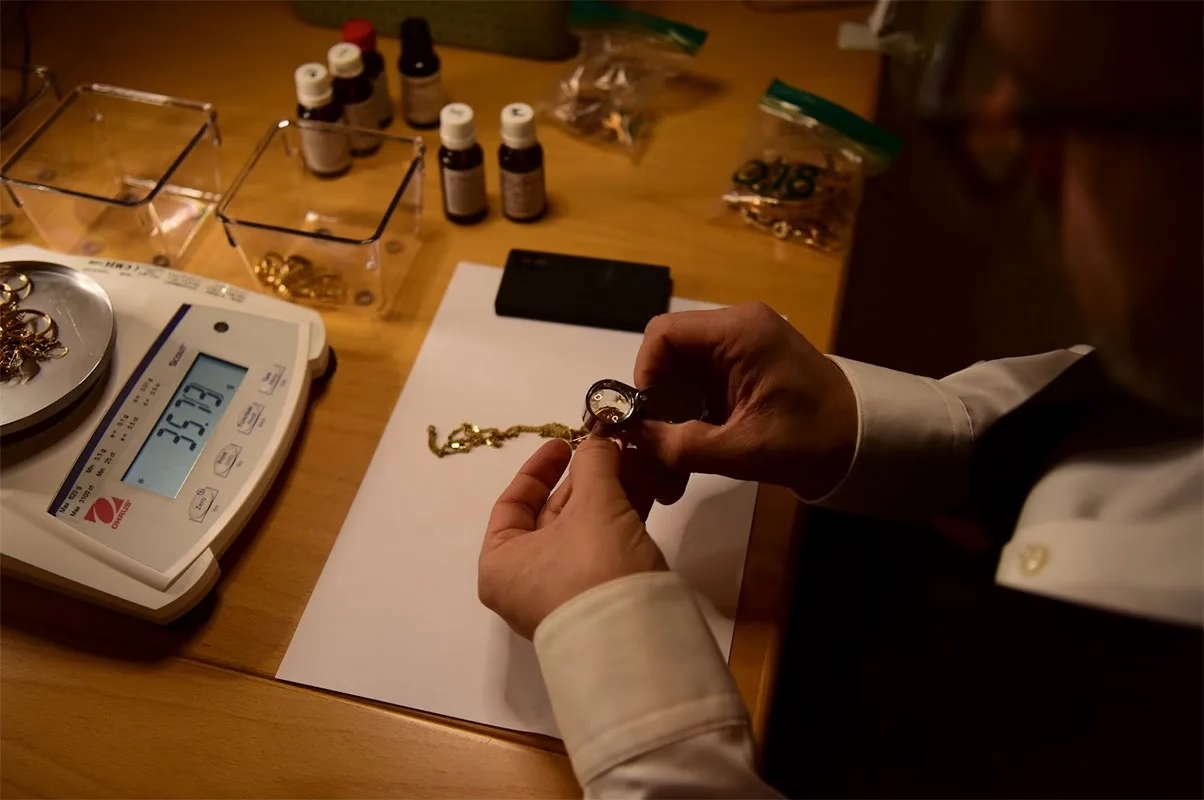
At Gold Arthur, yellow, white, rose and red gold are all valued in exactly the same way: by testing the purity and weighing the gold, right in front of you. The expert explains what they found and how any offer relates to the current gold market price.
Your free, private valuation takes around 15 minutes at a local stop, and there is no obligation to sell. Not every gold-coloured item turns out to be gold, but you’ll leave knowing what you have. See what happens during a gold valuation.
Frequently asked questions
Is white gold worth more than yellow gold?
Not when the carat and weight are the same. 18ct white and 18ct yellow gold both contain 75% gold, so their gold content is identical.
What’s the difference between rose gold and red gold?
Both get their colour from copper. Red gold has more copper and a deeper tone; rose gold has a little less copper and some silver, giving a softer pink. Names vary between jewellers.
Why has my white gold ring gone yellow?
The rhodium plating has worn away, revealing the natural colour of the alloy underneath. It’s normal and a jeweller can re-plate it.
Can I tell white gold from silver by looking at it?
Rarely. Check the hallmark: white gold carries a gold fineness mark such as 375 or 750, while sterling silver is marked 925. A test gives a definite answer.
Can I bring gold of different colours to one valuation?
Yes. Every item is tested and weighed in front of you, whatever its colour, and you decide afterwards what you’d like to do – there is no obligation to sell.