Articles · Updated
Gold is always gold – but a gold bar, a sovereign and a wedding ring are bought for very different reasons, and they’re valued differently too. For investors and central banks, gold is a way to hold wealth and spread risk. For most of us, it’s jewellery, gifts and keepsakes. Here’s how the two compare, and why it matters if you ever decide to sell.

Side by side
| Investment gold | Jewellery | |
|---|---|---|
| Main purpose | Holding wealth, spreading risk | Wearing, giving, remembering |
| Typical form | Bars and bullion coins | Rings, chains, watches, brooches |
| Purity | Bars usually 999.9; coins from 22ct (916) to 24ct | Usually 9ct (375) to 18ct (750) |
| Purchase price includes | Mostly the gold, plus a small premium | Gold, design, making, brand, retailer’s margin, stones |
| UK VAT on purchase | Qualifying investment gold is exempt | Standard VAT applies |
| Valued when sold on | Weight, purity, gold price (plus any collector value) | Weight, purity, gold price |
What counts as investment gold?
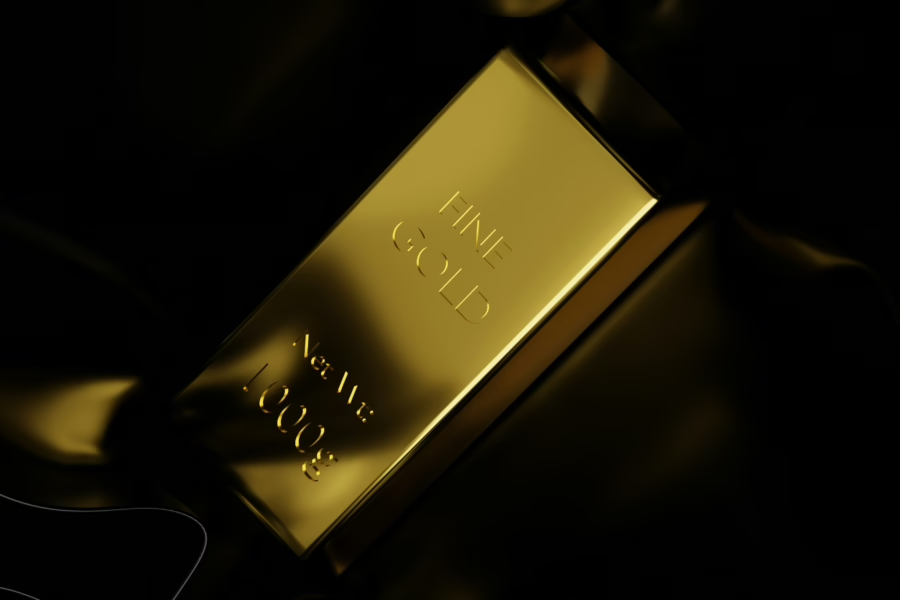
People who invest in gold usually want to protect their savings from inflation or spread their risk when other markets are unsettled – a topic we look at in why gold is so popular in uncertain times. Because investment products have a precisely defined weight and purity, their value can be followed closely against the gold price.
Under UK VAT rules, investment gold means bars of at least 995 fineness and coins of at least 900 fineness that were minted after 1800 and are, or have been, legal tender. Familiar examples include:
Gold bars
Sovereigns (22ct)
Britannias
Krugerrands (22ct)
Maple Leafs
Philharmonikers
Sovereigns (22ct)
Britannias
Krugerrands (22ct)
Maple Leafs
Philharmonikers
Sovereigns turn up in many British homes as christening or wedding gifts – one of the items we mention in what items at home can contain gold.
Why jewellery is different
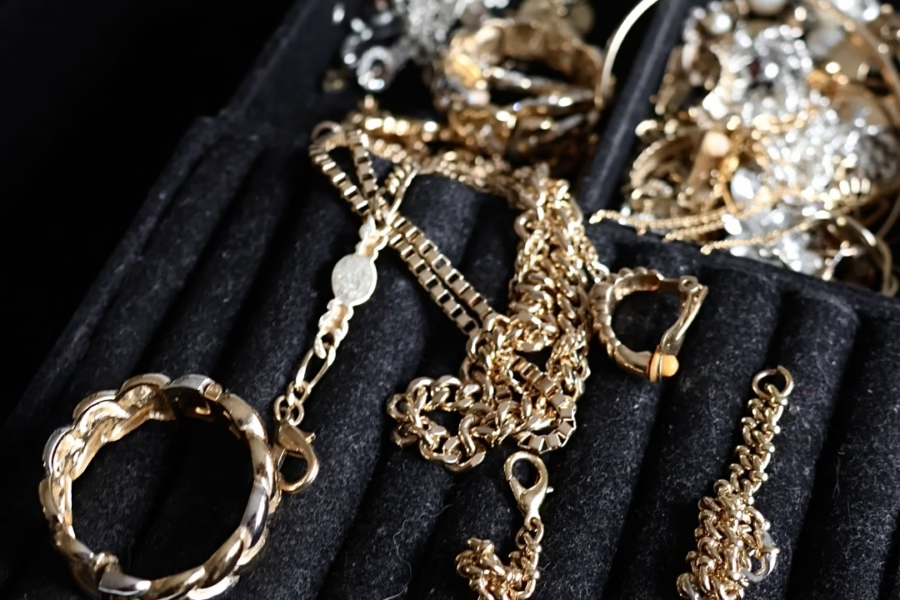
Jewellery is made to be worn, not stored. Pure gold is too soft for that, so jewellery uses alloys that are stronger and come in different shades, such as white or rose gold. The most common UK standards are 9ct (375, 37.5% gold), 14ct (585), 18ct (750) and 22ct (916) – the full list is in what do different carats mean. That’s why a gold coin and a necklace of the same weight can contain very different amounts of gold.
What you pay for when you buy jewellery
Illustration only, not to scale – the split varies widely between pieces.
When you sell jewellery to a gold buyer, only the first part – the gold – is valued, based on weight, purity and the current gold price. That’s why a piece rarely sells for what it originally cost in a shop. How the offer itself is worked out is explained in selling gold: what do I need to know?
UK tax at a glance
VATQualifying investment gold bars and coins are exempt from VAT. Jewellery and decorative gold are not.
CGT on UK coinsUK legal-tender coins such as Sovereigns and Britannias are generally exempt from Capital Gains Tax for UK individuals.
Bars & jewelleryGold bars and non-UK coins can be subject to CGT on a gain. Personal items such as jewellery fall under separate rules for personal possessions, with an exemption for items sold for £6,000 or less.
General information only, not tax advice. Rules can change and depend on your circumstances – check GOV.UK or speak to a tax adviser.
Not all value is financial
The value of investment gold is mostly about money. Jewellery is different: an inherited necklace, an old watch or a great-grandmother’s ring can mean far more to you than its gold ever could. A valuation can only measure the metal – so it’s worth deciding what you’d like to keep for its memories before you think about selling anything.
How gold is valued at Gold Arthur
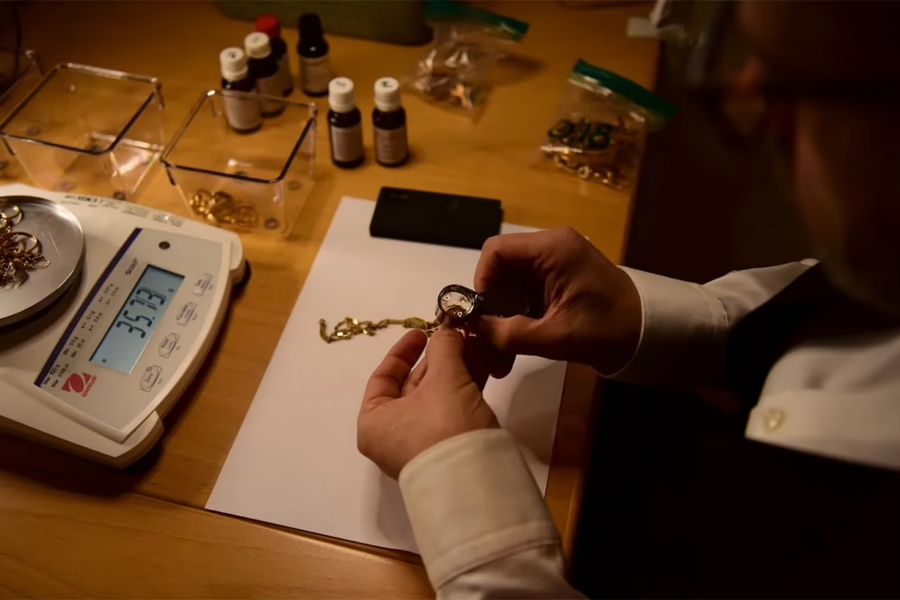
Whether you bring coins, a bar or a box of old jewellery, the gold is valued on its purity, weight and the current gold price. Gold Arthur visits local stops across the UK; your free, private valuation takes around 15 minutes and everything is evaluated in front of you. If a coin might have collector value, ask the expert about it before you decide. There is no obligation to sell – see what happens during a gold valuation.
Frequently asked questions
Is gold jewellery a good investment?
Jewellery is usually bought for wearing rather than investing. Its purchase price includes design, making and retail costs, while its resale gold value depends only on the gold it contains.
Are gold sovereigns investment gold?
Yes. Sovereigns are 22ct gold and qualify as investment gold for VAT purposes. As UK legal tender, they’re also generally exempt from Capital Gains Tax for UK individuals.
Why won’t my jewellery sell for what I paid?
The shop price included design, production, brand and the retailer’s margin. When you sell to a gold buyer, only the gold content is valued.
Can I bring coins and jewellery to the same valuation?
Yes. Everything is sorted, tested and weighed in front of you, and you decide afterwards what, if anything, you’d like to sell.
Sources
- GOV.UK: Gold imports and exports (VAT Notice 701/21)
- GOV.UK: Investment gold coins (VAT Notice 701/21A)
- HMRC Capital Gains Manual CG78305 (UK legal-tender coins); GOV.UK: Capital Gains Tax on personal possessions
Checked 2 October 2026.