Articles · Updated 9
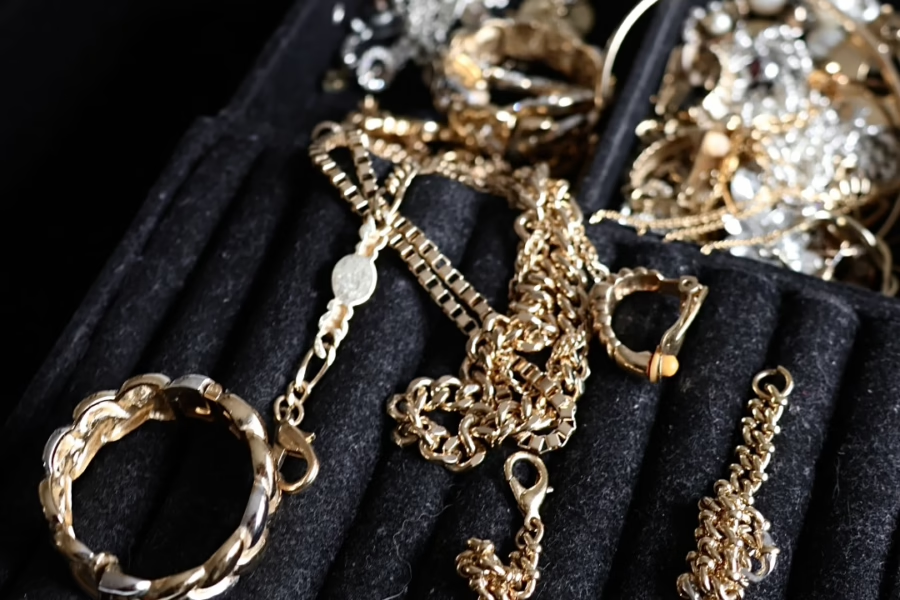
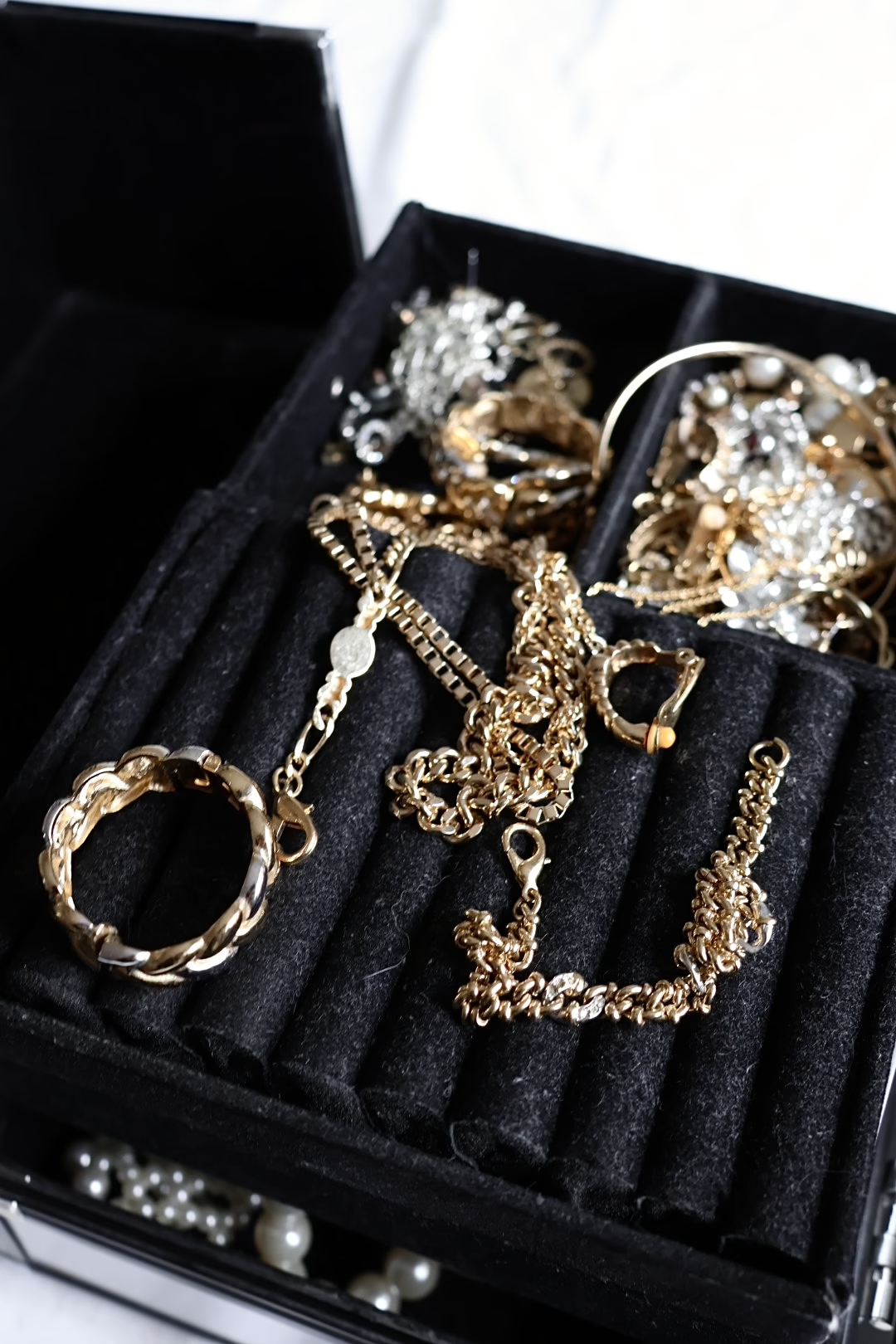
A broken 9ct chain, an odd earring, a ring that no longer fits. Most UK homes have a little scrap gold tucked away, and the first question is always the same: what is it actually worth? The good news is that it isn’t a mystery. Once you know how gold is valued, you can understand any offer you’re given, and decide calmly for yourself.
How scrap gold is priced
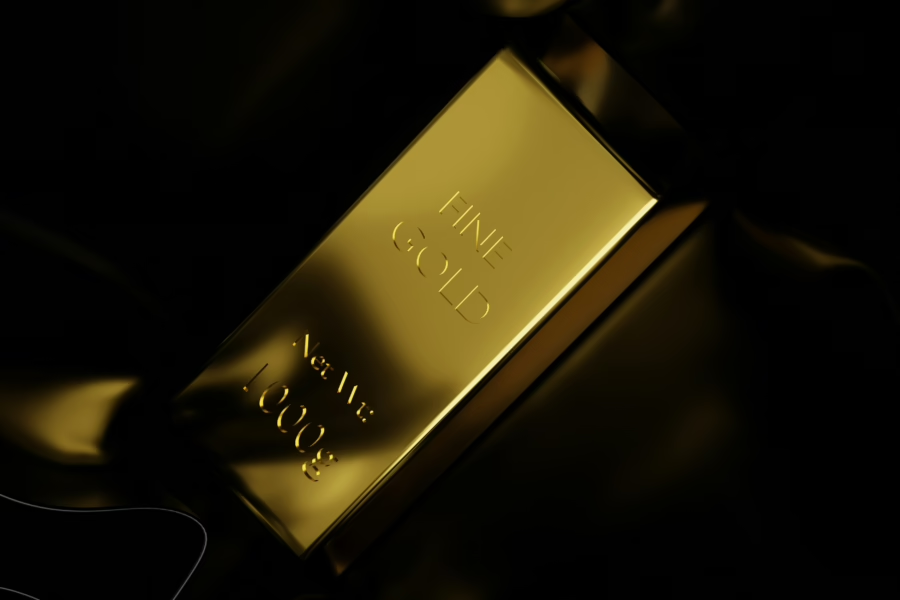
When gold is sold as scrap, nobody is paying for the design, the brand or what it cost in the shop. The item will be melted and refined, so its value comes down to one thing: how much pure gold it contains, multiplied by today’s gold price.
The short answer: the gold content of your jewellery is its weight times its purity. Multiply that by the price of pure gold per gram and you get its melt value. Any offer you receive will be lower than this figure, because refining and handling have a cost, but it should be clearly based on it.
Weight in grams
×
Purity (hallmark ÷ 1000)
×
Gold price per gram
=
Melt value
×
Purity (hallmark ÷ 1000)
×
Gold price per gram
=
Melt value
Gold is traded internationally in troy ounces, and one troy ounce is 31.1 grams. To get the price per gram, divide the ounce price in pounds by 31.1. The price moves every working day, which is why the same ring can be worth a different amount next month.
What each carat is worth per gram
In the UK, gold purity is shown by a hallmark: a three-digit number giving the gold content in parts per thousand. 375 means 375 parts in every 1,000 are gold, which is 9ct. If you’re not sure where to look for the mark, or whether an item is gold at all, Recognising genuine gold at home walks you through it. The table shows what one gram of each purity contains, and what it would be worth if pure gold were trading at £100 per gram.
| Carat | Hallmark | Pure gold per gram | Example value per gram |
|---|---|---|---|
| 9ct | 375 | 0.375 g | £37.50 |
| 14ct | 585 | 0.585 g | £58.50 |
| 18ct | 750 | 0.750 g | £75.00 |
| 22ct | 916 | 0.916 g | £91.60 |
| 24ct | 999 | 0.999 g | £99.90 |
9ct is by far the most common jewellery gold in the UK, so it’s worth knowing that a 9ct item is only 37.5% gold. The rest is copper, silver and other metals that make it harder wearing. For a fuller explanation of each purity, see What do different carats mean?
Work out your own gold in three steps
Here’s the calculation applied to a typical item: a 9ct chain weighing 12 grams, again using the £100 per gram example price.
1
Weigh it
Use digital kitchen scales that show at least one decimal place. Weigh each carat separately. Our chain weighs 12 g.
2
Find the pure gold content
Multiply the weight by the purity. The hallmark reads 375, so: 12 g × 0.375 = 4.5 g of pure gold.
3
Apply the gold price
4.5 g × £100 = £450 example melt value. This isn’t what a buyer pays, but it tells you what the offer is based on, so you can ask sensible questions about it.
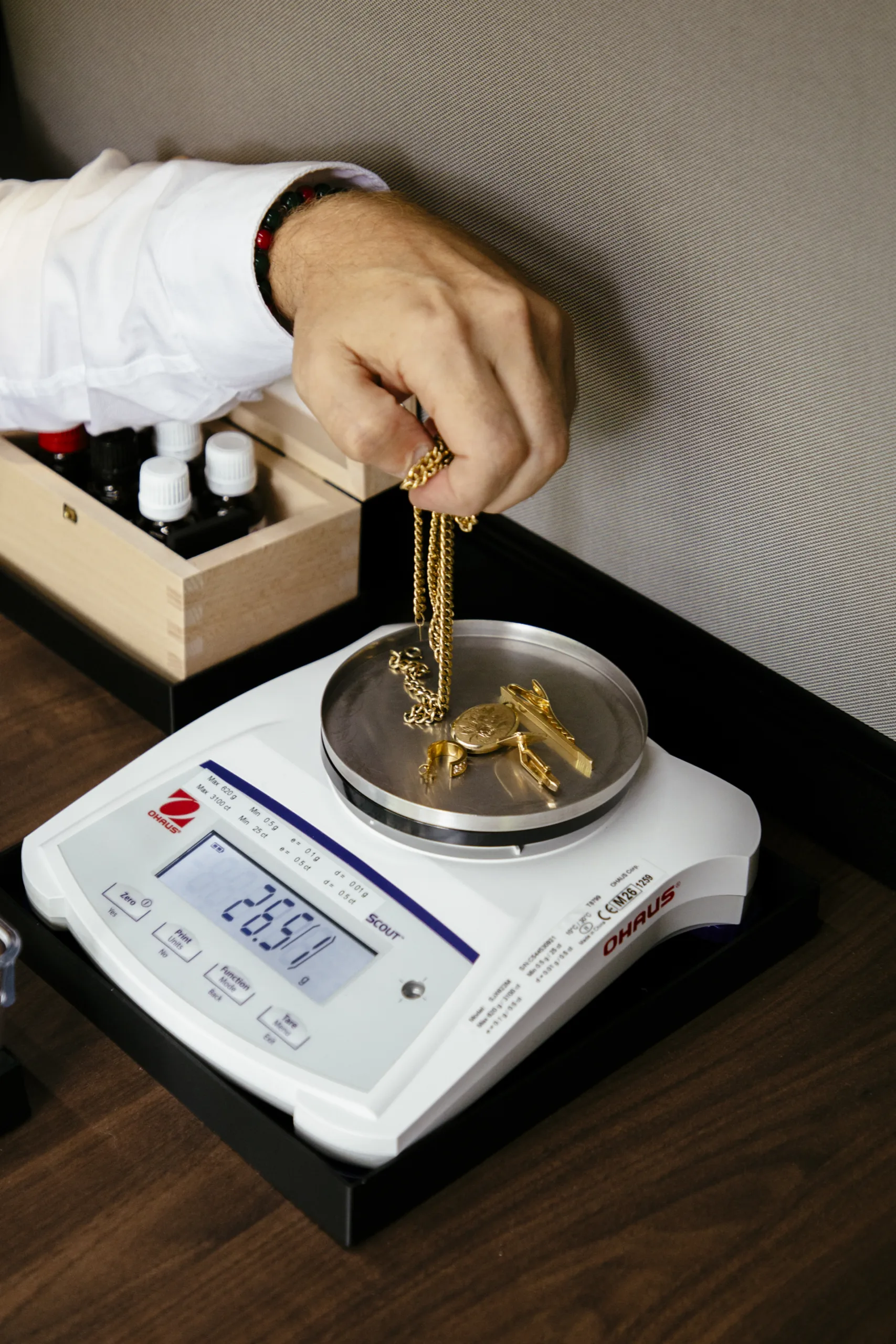
Getting an accurate weight at home
Kitchen scales are fine for a rough figure, but small differences add up. Half a gram of 18ct gold is worth several pounds, so a professional valuation uses precision scales.
Remove stones before weighing if you can, or accept that the figure is a little high. Diamonds and gemstones are weighed with the gold but don’t count towards the gold content. Anything that isn’t gold, such as steel clasps or springs, is deducted too.
Sovereigns and other 22ct gold
Some of the most valuable scrap gold in British homes isn’t jewellery at all. Gold sovereigns are made from 22ct gold, and many were set into pendants, rings or bracelets. Because their weight and purity are fixed, their gold content is easy to work out. Sovereigns sit somewhere between jewellery and bullion, and Investment gold vs jewellery explains how the two differ.
Full sovereign
Weight: 7.98 g · 22ct
About 7.3 g of pure gold
Half sovereign
Weight: 3.99 g · 22ct
About 3.7 g of pure gold
22ct wedding band
Hallmark: 916
91.6% of its weight is gold
Rare dates or coins in exceptional condition can be worth more to collectors than their gold content alone. If you think a coin could be unusual, it’s worth asking a coin specialist before you decide what to do with it.
What a fair quote looks like
No buyer pays the full melt value. Refining costs money, and every buyer has running costs, so an offer is always lower than the figure you calculated. That’s normal. What matters is whether you can see how the offer was reached, and whether you feel free to say no.
Signs of a fair quote
- ✓Your gold is weighed in front of you
- ✓Each carat is weighed and priced separately
- ✓The offer is based on today’s gold price
- ✓You can say no and take everything home
Warning signs
- ✗One lump sum for a mixed bag of carats
- ✗Your gold is taken out of sight to be weighed
- ✗No explanation of how the price was reached
- ✗Pressure to decide on the spot
With postal services, the weighing and testing happen after your gold has left your hands, which makes the offer harder to follow. Whoever you choose, having your own rough calculation to hand makes any conversation about price easier. If you’re still weighing up whether to sell at all, Selling gold: what do I need to know? covers the questions worth asking first.
How a valuation works at Gold Arthur
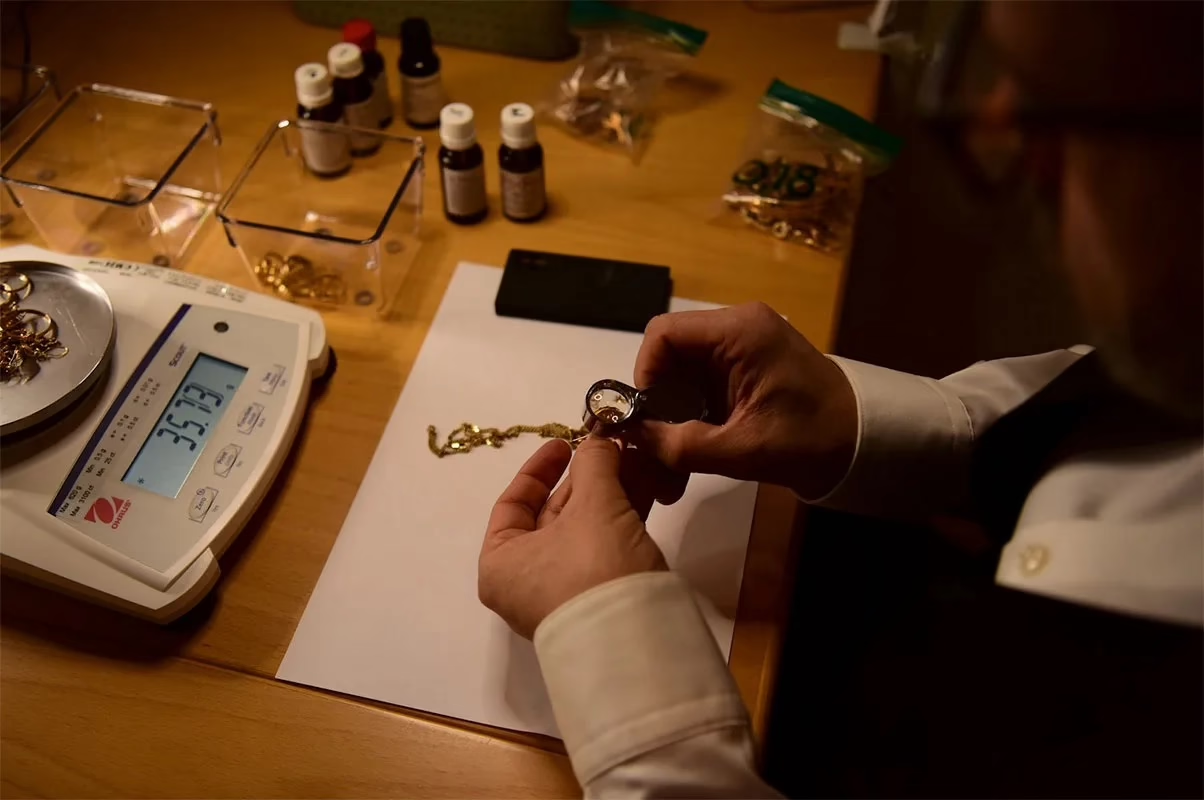
Gold Arthur brings a gold expert to local stopping points, so you don’t need to post your jewellery or take it into a city-centre shop. You book a free, private appointment and bring your gold along. Everything is weighed and tested in front of you, and the expert explains what they find: the purity, the weight, and how the offer relates to the current gold price.
Free and private
One-to-one, about 15 minutes
In front of you
Your gold stays in sight
Your decision
Sell, or take it all home
Paid by bank transfer
Within five banking days
Questions are welcome, and there’s no rush. If the offer doesn’t feel right, you simply take your gold home again. For a step-by-step look at the appointment, read What happens during a gold appraisal?

Before you sell: a quick checklist
- Sort your items by hallmark: 375, 585, 750, 916
- Weigh each group and note the totals
- Check today’s gold price and calculate the melt value
- Set aside coins or pieces that might have collector value
- Bring unmarked items too. Their purity can be tested during the valuation
Frequently asked questions
How much is 9ct scrap gold worth per gram?
9ct gold is 37.5% pure, so one gram contains 0.375 g of gold. Multiply that by today’s price of pure gold per gram to get the melt value. At an example price of £100 per gram, one gram of 9ct would contain £37.50 worth of gold. An offer will be lower than this, because refining and handling have a cost.
Why do buyers pay less than the gold price?
Scrap gold has to be melted and refined before it can be sold on, and that costs money. Buyers also cover their own running costs. A transparent buyer will explain how their offer relates to the current gold price, so you can decide whether it feels right for you.
Does broken gold get a lower price?
No. Scrap gold is valued on its gold content, so a snapped chain is worth the same per gram as a perfect one of the same carat. Single earrings, bent rings and tangled chains all still contain gold, so they’re worth bringing to a valuation.
What if my gold has no hallmark?
Very small items, older pieces and jewellery bought abroad often have no UK hallmark, or one that has worn away. That doesn’t mean it isn’t gold. Its purity can be tested during a valuation, and it’s priced in the same way once the carat is known.
Are stones included in the price?
A scrap gold value is based on the gold content only, so the weight of any stones doesn’t count towards it. Ask the expert how stones are handled in your valuation.
Do I have to sell if I book a valuation?
No. The valuation is free, and booking doesn’t commit you to anything. You hear the offer, ask any questions you have, and then decide. If you’d rather keep your gold, you take everything home with you.
How and when will I be paid if I sell?
Payment is made to your bank account no later than the fifth banking day after the sale. Gold Arthur doesn’t pay in cash.