Articles · Updated
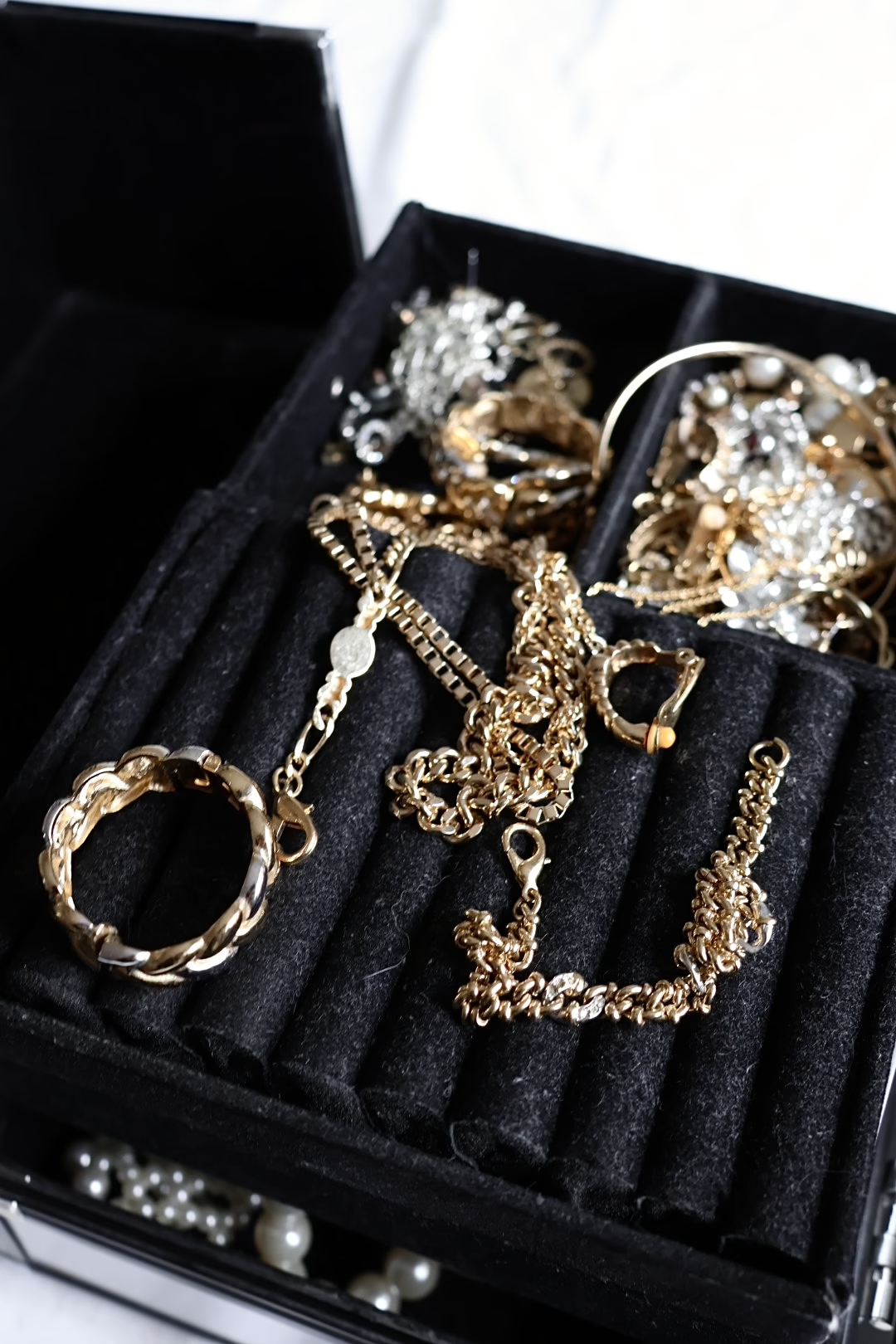
A jewellery box from a parent or grandparent can hold decades of memories: a wedding ring, a charm bracelet, chains that were worn every day. Deciding what to do with it is rarely just a practical question. This guide helps you take it one step at a time, so that whatever you decide, you decide it knowing what you have.
There’s no need to rush
Jewellery often ends up in a drawer for years after someone passes away, and that’s completely normal. Gold doesn’t spoil or lose its gold content while it waits. When you do feel ready to look through it, it can help to think of the process in stages rather than as one big decision.
At first
Nothing needs deciding. Keep everything together somewhere safe.
When you’re ready
Go through the pieces, ideally with family, and sort them into what you want to keep and what you’re unsure about.
Before deciding
Find out what the pieces are made of and what they’re worth, so the choice is based on facts.
Then decide
Keep, pass on, sell some, or sell none. All of these are fine.
Sort first: keep, pass on, or have valued
Sorting before you think about money takes a lot of the pressure away. Three piles usually cover everything.
♥
Keep
Pieces you’ll wear, or that carry a memory you want close. Value doesn’t matter here.
⇄
Pass on
Items another family member would treasure. Worth asking before anything else happens.
⚖
Have valued
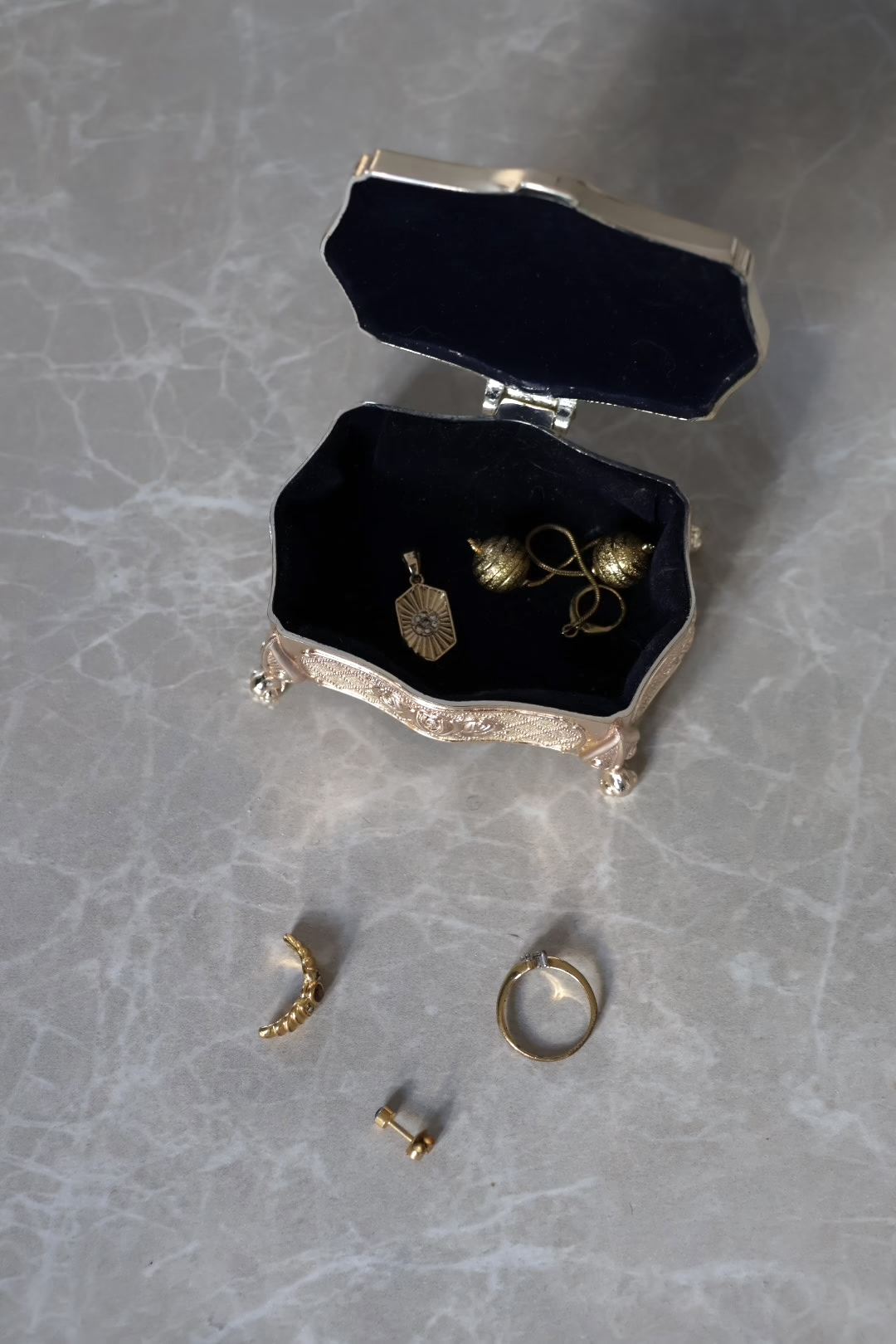
Broken pieces, odd earrings and things nobody will wear. Find out what they are before deciding.
Don’t forget the less obvious items in the third pile. Old watch cases, cufflinks, tie pins and even dental gold can contain gold. What items at home can contain gold? lists the ones people most often overlook.
Find out what you have
Older jewellery can be a mix of carats, metals and plated pieces, and it isn’t always obvious which is which. Most UK gold carries a hallmark: a small stamped number showing the gold content, such as 375 for 9ct or 750 for 18ct. It’s usually inside a ring band or near the clasp of a chain. Recognising genuine gold at home explains where to look and what the marks mean.
The carat matters because it tells you how much of each piece is actually gold. A 9ct chain is 37.5% gold; an 18ct ring is 75%. If the numbers are new to you, What do different carats mean? is a short, clear introduction.
Sentimental value and gold value are different things
A valuation can only tell you the value of the gold. It can’t measure what a ring meant to the person who wore it, and it shouldn’t try to. Keeping those two kinds of value apart often makes the decision feel lighter: you can hold on to the memory without holding on to every object.
“
Which of these would I reach for if the house were empty tomorrow?
A question worth asking yourself
There are also options between keeping and selling. Some families have a single piece remade into something that will be worn, or keep one charm from a bracelet and let the rest go. Others photograph each item before deciding, so the memory stays even if the piece doesn’t.
A note on tax
For most people selling a few inherited pieces, tax won’t come into it. Three points from HMRC’s guidance are worth knowing:
Inheriting itThere’s no Capital Gains Tax when someone dies. Inheritance Tax, if any is due, is dealt with by the estate.
Its starting valueFor tax purposes, inherited items are treated as acquired at their market value on the date of death, so any gain only counts from then.
Selling itPersonal possessions such as jewellery sold for £6,000 or less per item are usually exempt from Capital Gains Tax. A matching set sold to the same buyer counts as one item.
What happens at a valuation
Many people worry about handing over something precious, or feeling pressured once they’re sat across the table. A Gold Arthur valuation is designed around those worries. A gold expert comes to a local stopping point near you, and you book a free, private one-to-one appointment of about 15 minutes.
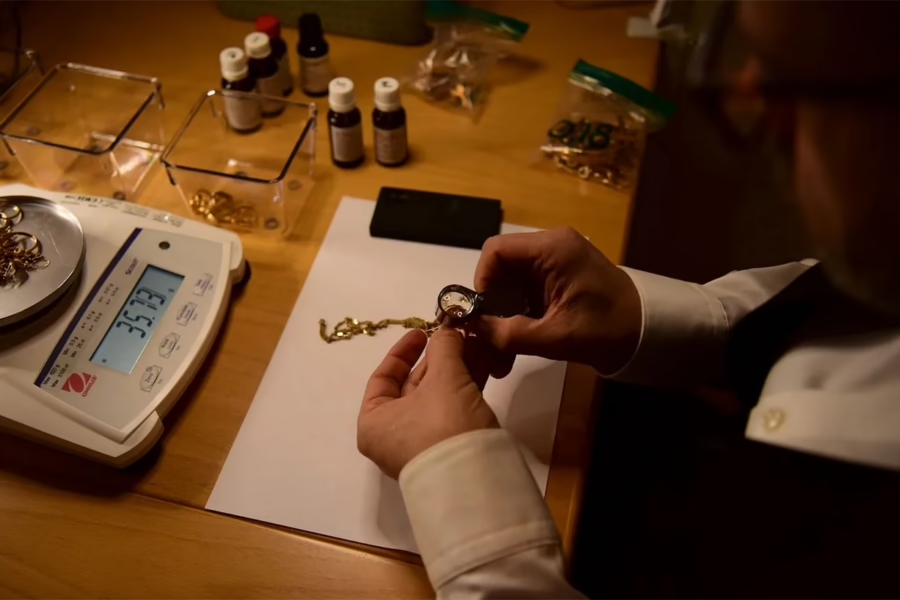
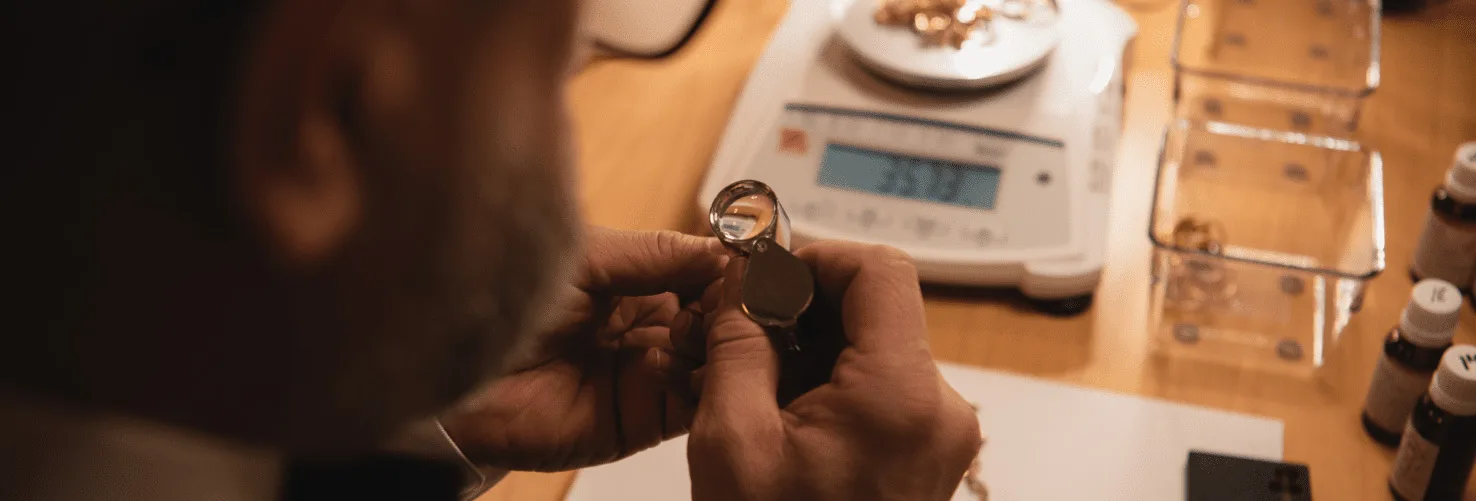
Your jewellery stays in front of you the whole time. Each piece is weighed and tested where you can see it, and the expert explains what they find: what it’s made of, how much it weighs, and how the offer relates to the current gold price. You’re welcome to ask as many questions as you like. For a closer look at the appointment, read What happens during a gold appraisal?
Free and private
Evaluated in front of you
No obligation to sell
Paid by bank transfer within five banking days
Frequently asked questions
Can I sell just some of the pieces?
Yes. Each piece is valued separately, so you can decide item by item. Many people sell a few pieces and keep the rest.
What if my family can’t agree?
It’s common, and there’s no need to force a decision. Because a valuation is free and doesn’t commit you to selling, it can give everyone the same facts to talk about before anything is decided.
Do I need any paperwork?
You don’t need receipts or certificates to have jewellery valued. If an estate is still being settled, though, the jewellery may not yet be yours to sell, so check with the executor first.
Is broken jewellery worth bringing?
Yes. Gold is valued on its gold content, so a snapped chain or a single earring still contains gold. Not every item will turn out to be gold, but it’s worth finding out.
Do I pay tax if I sell inherited jewellery?
Usually not. HMRC treats jewellery as a personal possession, and items sold for £6,000 or less each are normally exempt from Capital Gains Tax. Check GOV.UK or a tax adviser if you’re selling more valuable pieces.
Sources
- GOV.UK: Capital Gains Tax on personal possessions
- HMRC: Personal possessions and Capital Gains Tax (HS293)
- HMRC Capital Gains Manual: Death and CGT (CG36300)
Information checked on 25 September 2026.