Articles · Updated
Silver often lives in gold’s shadow, yet many UK homes have far more of it: a canteen of cutlery, a christening cup, old bracelets and charms. The tricky part is knowing what’s solid silver and what’s only silver-plated. Here’s how to tell, why silver behaves differently from gold – and how to find out what yours is worth.

Real silver, silver-plated or no silver at all?
Turn the item over and look for marks – on the back of a spoon handle, under a dish or inside a ring. Then sort it into one of three piles:
Some silver items have no hallmark at all: in the UK, silver under 7.78 grams doesn’t need one, and marks wear away over time. White gold and platinum can also be mistaken for silver – white gold carries gold marks such as 375, 585 or 750, and platinum is often marked 950 or Pt950. For more on telling white metals apart, see got white gold lying around? and for every mark explained, understanding gold and silver terminology.
Why silver matters – from mirrors to solar panels
Silver has been used for almost as long as gold: in coins, tableware, mirrors and, for well over a century, photography. Its bright, reflective surface made it the choice for cutlery, candlesticks and decorative pieces in many British homes.
Today, most silver ends up in industry. It’s the best electrical conductor of all metals, so it’s used in almost every kind of electronics, as well as in solar panels and electric vehicles. Its antibacterial properties also make it useful in some medical products and wound dressings. Unlike gold, though, silver does react with sulphur in the air – which is why it tarnishes and turns dark over time.
Why silver’s price behaves differently from gold’s
Silver is also far more plentiful than gold, so it’s worth much less per gram. But many households have a lot more of it by weight – and that’s why it can still be worth having checked. Silver’s price can rise and fall quickly, so what it’s worth depends on the day it’s valued.
Getting your silver valued

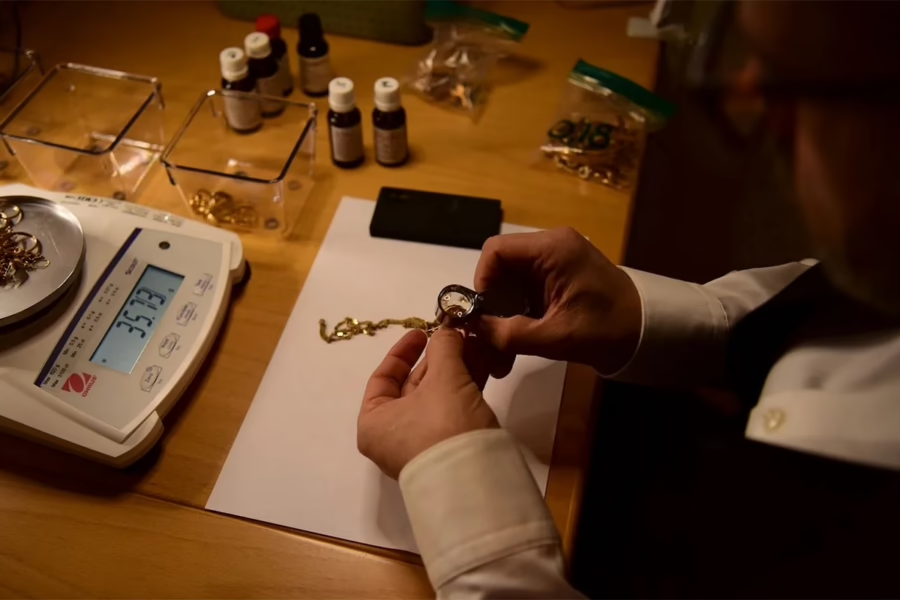
Gold Arthur values and buys marked silver as well as gold. If you’re not sure what your items are, bring them anyway: the expert will sort them in front of you and explain what is solid silver, what is plated and what isn’t silver at all.
Your free, private valuation takes around 15 minutes at a local stop, and there is no obligation to sell. If you do sell, you’re paid by bank transfer no later than the fifth banking day, never in cash. See what happens during a valuation.
Frequently asked questions
Is EPNS cutlery worth anything?
EPNS is silver-plated, so it contains only a very thin layer of silver and its metal value is usually very low. Solid sterling silver, marked 925 or with the lion passant, is a different matter.
Does tarnished silver lose its value?
No. Tarnish is only on the surface and doesn’t change the silver content. There’s no need to polish items before a valuation – heavy polishing can wear down the marks.
What does the lion mark on silver mean?
The lion passant is the traditional British symbol for sterling silver (92.5%). Today it’s an optional extra mark alongside the 925 fineness mark.
Why is silver worth so much less than gold?
Silver is much more abundant, and its price depends heavily on industrial demand. That makes it cheaper per gram – though larger quantities, such as a full cutlery set, can still add up.
Can I bring gold and silver to the same appointment?
Yes. The expert sorts everything by metal and purity in front of you, and you decide afterwards what, if anything, you’d like to sell.