Articles · Updated
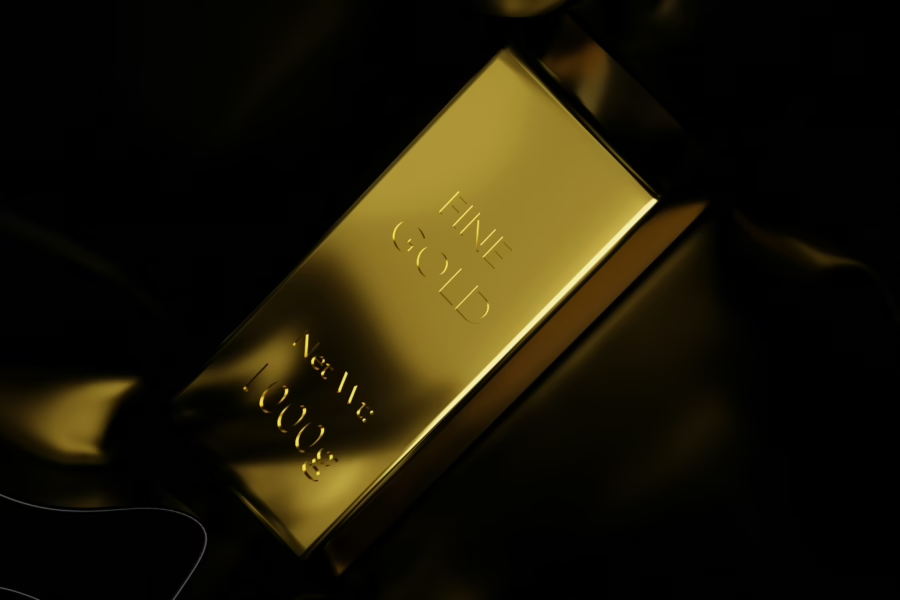
Gold doesn’t rust, corrode or wear out, so almost all the gold ever mined still exists. What was once a coin may now be a necklace, a gold bar or a tiny contact inside a phone. If gold can be melted down and reused endlessly, why do we still mine it – and how does recycling the gold you already own fit in?
Where the world’s new gold supply comes from
Each year’s gold supply comes from two places: new gold dug out of the ground, and existing gold that’s recycled. In 2025, according to the World Gold Council:
More than a quarter of the world’s gold supply now comes from recycling – the highest recycling level since 2012.
Source: World Gold Council, Gold Demand Trends Full Year 2025. Total supply 5,002 t (other minor flows not shown).
Why is gold still mined?
Demand keeps growing
Jewellery, investment, central banks and technology together used more than 5,000 tonnes in 2025.
Most gold isn’t for sale
Much of the world’s gold sits in jewellery boxes, vaults, central bank reserves and devices – not on the market.
It can’t be manufactured
Gold has to be found in nature. You can’t simply produce more when demand rises.
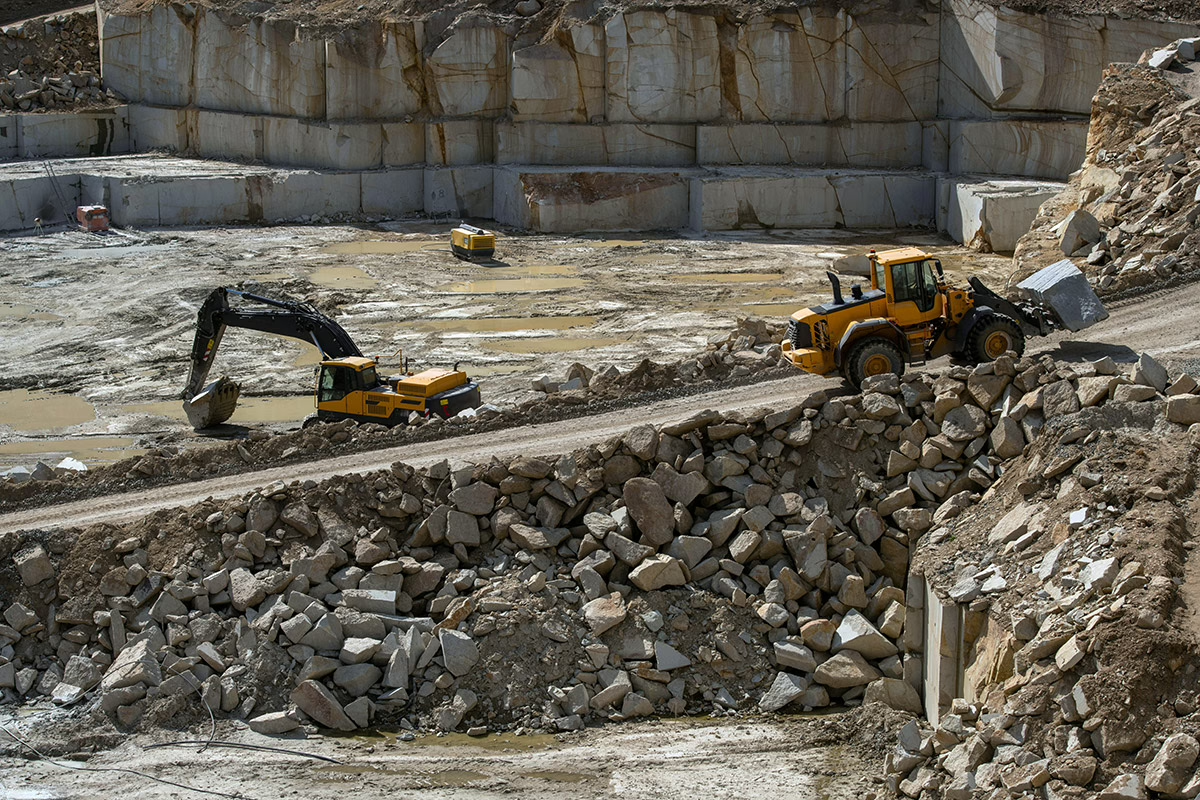
Mining itself is demanding. Ore often contains only a few grams of gold per tonne of rock, so the rock has to be crushed, ground and chemically processed to separate the gold. Mines need large amounts of energy, water and infrastructure, and new deposits are harder to find and reach than they used to be. That’s a big part of why recycling matters.
1 tonne
of ore
a few grams
of gold
By comparison, an old 9ct chain is more than a third pure gold – a far richer source than any mine.
Why recycling gold makes sense
Recycled gold is exactly the same as newly mined gold. Melting and refining don’t change its properties at all – we explain why in what makes gold such a unique material. Every gram that’s reused is a gram that doesn’t need to be mined, which reduces the energy, land and water that new mining requires.
Recycled jewellery gold can become new jewellery, electronics, dental work or investment bars. And because nearly every ounce ever mined still exists, there’s already a huge amount above ground – one of the facts in 10 facts about gold.
Two ways back into circulation
Route 1
Recycled as raw material
Most unwanted gold is melted, refined and reused – the gold itself starts a new life in a new form.
Route 2
Kept in its original form
Well-made, distinctive pieces can be inspected, restored when needed and worn by a new owner for years to come.
Vintage jewellery is a good example of the second route. Instead of making something new, an existing piece is kept in use and appreciated for its craftsmanship, design and history – making the most of gold that has already been mined and worked.
My Precious, part of the same group as Gold Arthur, specialises in carefully selected vintage jewellery that is inspected and, when needed, restored before it’s offered for sale. Looking for a piece with a story of its own? Explore the vintage jewellery at My Precious.
Your own part in the circle
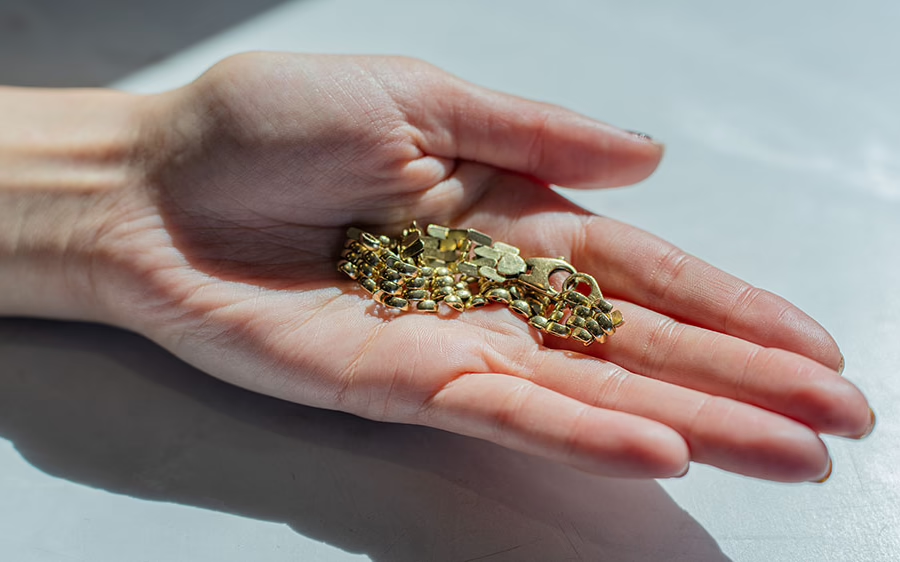
Many of us have gold at home that we no longer wear – broken chains, odd earrings, old rings. Our guide what items at home can contain gold helps you find it. Keep what means something to you; for the rest, returning it to the circular economy is a simple, sustainable choice.
At a free, private Gold Arthur valuation at a local stop, your items are tested and weighed in front of you, and the expert explains how any offer relates to the current gold market price. There is no obligation to sell. Read what happens during a gold valuation.
Frequently asked questions
How much of the world’s gold is recycled?
In 2025, recycling supplied 1,404 tonnes of gold – more than a quarter of total supply – according to the World Gold Council.
Is recycled gold as good as new gold?
Yes. Gold keeps all its properties when it’s melted and refined, so recycled gold is identical in quality to newly mined gold.
Why don’t we just recycle all the gold we need?
Most existing gold is being kept as jewellery, investment or reserves rather than offered for recycling, while demand keeps growing. Recycling covers part of the need, and mining the rest.
Does all sold jewellery get melted down?
Not all of it. Most is recycled as raw material, but some well-made vintage pieces can be restored and kept in use in their original form.
Sources
- World Gold Council: Gold Demand Trends – Full Year 2025, Supply (2026)
Checked 2 October 2026.