Articles · Updated
Gold is best known for jewellery, but it’s a far more remarkable metal than most people realise. From its sheer density to the fact that almost every ounce ever mined still exists today, here are ten facts about gold – and what some of them mean for the pieces in your own drawer.
Gold by the numbers
~220,700 t
of gold mined in all of history
~22 m
the side of a cube holding all of it
31.1 g
in one troy ounce
1300
the year UK hallmarking began
10 facts about gold
01Science
Pure gold doesn’t rust or tarnish
Pure gold doesn’t react with air or water, so it doesn’t rust or corrode. Jewellery alloys are a little different: lower carats such as 9ct contain more other metals and can darken slightly over time – which is no sign of fake gold, as we explain in how to tell if gold is real at home.
02Value
A broken chain can be worth as much as an intact one
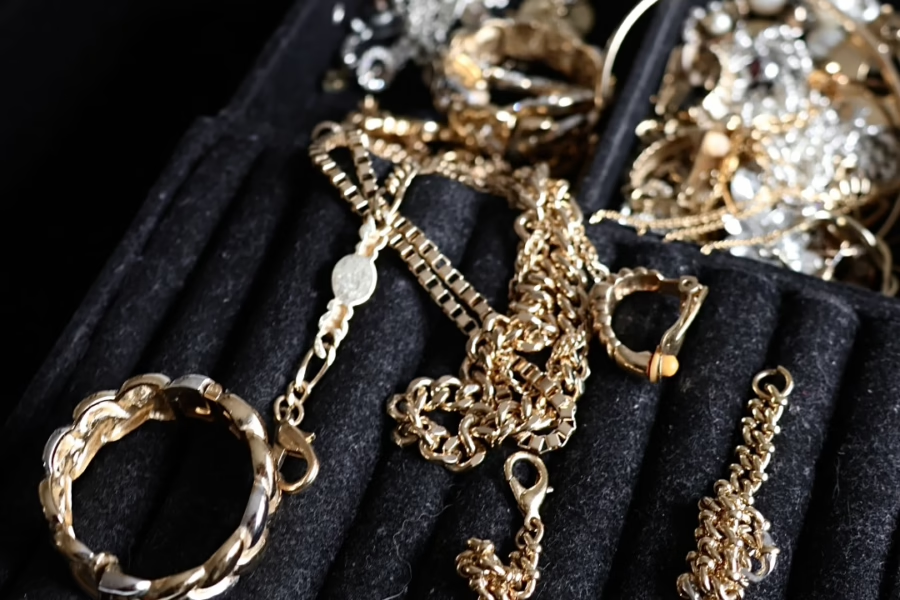
The gold value of a piece depends on its weight and purity – not its condition. A snapped chain, a single earring or a bent ring contains just as much gold as an undamaged piece of the same weight. Scratches and engravings don’t change the purity either.
03Science
Gold is soft – and surprisingly heavy
Pure gold is soft enough to dent and scratch easily, which is why jewellery gold is always mixed with other metals. It’s also very dense – about 19.3 grams per cubic centimetre, roughly 70% denser than lead. That’s why even a small gold piece feels heavy in your hand.
04Recycling
Almost all gold ever mined still exists
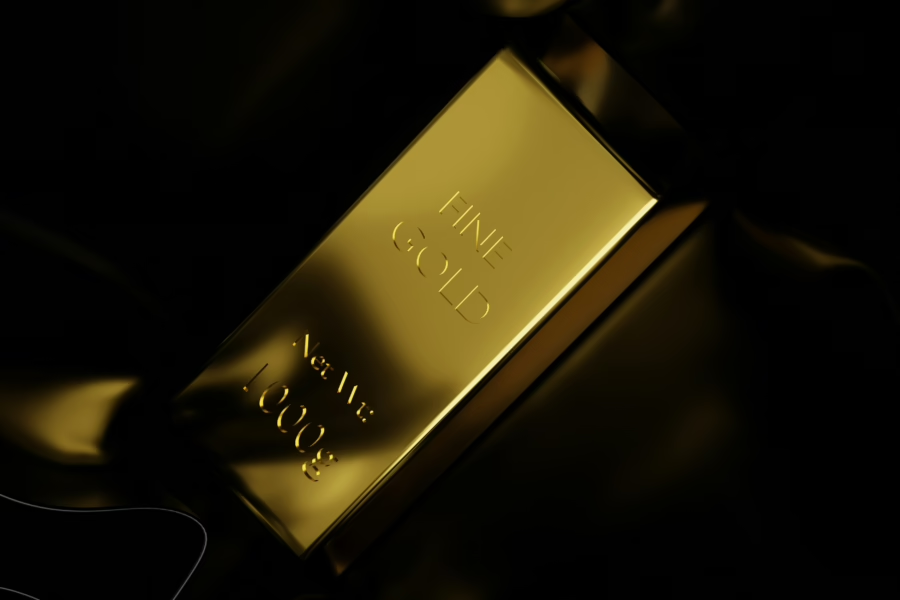
Because gold doesn’t wear out, nearly every ounce ever mined is still around in some form. The World Gold Council estimates the total at around 220,700 tonnes, about two-thirds of it mined since 1950. Cast into one block, it would form a cube only about 22 metres on each side.
05Recycling
Old jewellery can end up in your phone
Recycled gold keeps all its properties, so melted and refined jewellery gold can be used again in new jewellery, electronics or medical equipment. Reusing gold also reduces the need for new mining – more in the circular economy of gold.
06Value
Colour doesn’t tell you the purity
Yellow, white and rose gold get their colour from the metals mixed in, not from the amount of gold. An 18ct white gold ring and an 18ct yellow one contain the same amount of gold. See understanding different gold colours.
07Price
Gold is priced in a special ounce
The gold price you hear in the news is per troy ounce – about 31.1 grams, a little heavier than a standard kitchen ounce of about 28.3 grams. It’s the price of pure gold on the wholesale market, which is why it isn’t the same as an offer for jewellery.
08Science
Gold is found almost pure in nature
Most metals are locked inside ores and need heavy processing. Gold, by contrast, can be found as nearly pure flakes and nuggets in rivers and rock – one reason people have prized it for thousands of years.
09History
The UK has hallmarked gold since 1300
A statute of Edward I in 1300 introduced the testing and marking of precious metal in England – one of the world’s oldest forms of consumer protection. London’s leopard’s head mark is still used today. The marks you’ll see now are explained in understanding gold and silver terminology.
10Valuation
A valuation doesn’t reduce your jewellery’s value
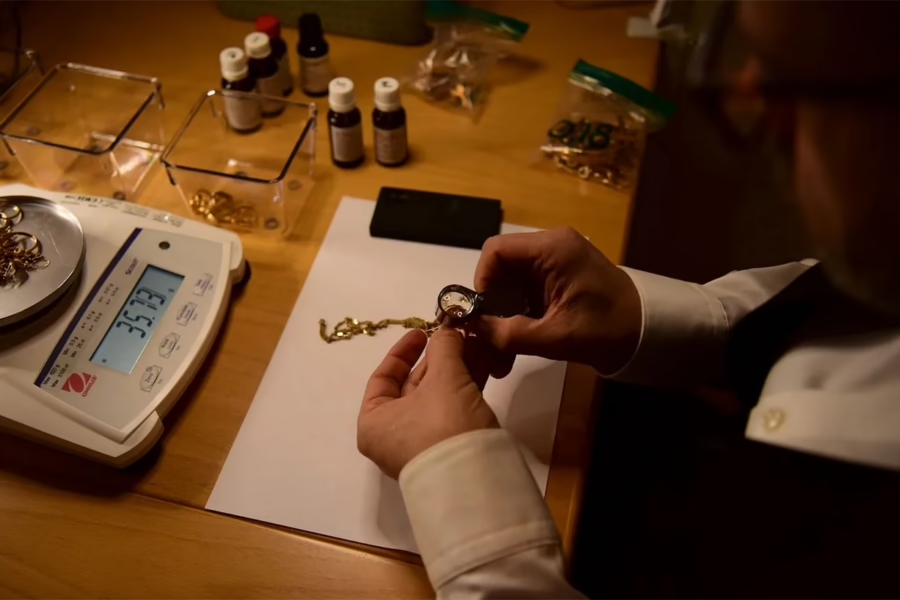
A professional valuation weighs your items and, only if a mark is missing, tests them carefully on an inconspicuous spot. It doesn’t reduce their value, and if you decide not to sell, everything is handed back to you. See what happens during a gold valuation.
What this means for the gold in your drawer

Old, broken or out-of-fashion pieces still contain the same gold they always did. Its value follows the gold market, which can rise as well as fall – so the only way to know what your items are worth today is to have them weighed and tested.
Gold Arthur visits local stops across the UK. Your free, private valuation takes around 15 minutes, everything is evaluated in front of you, and there is no obligation to sell. If you do sell, payment is made by bank transfer no later than the fifth banking day – never in cash.
Frequently asked questions
How much gold has ever been mined?
The World Gold Council estimates around 220,700 tonnes by the end of 2025. Almost all of it still exists, and nearly half is held as jewellery.
Is broken gold jewellery worth anything?
If it’s real gold, yes: its gold value depends on weight and purity, not condition. Gold-plated items contain very little gold, so a test is the best way to find out what you have.
Why is gold measured in troy ounces?
The troy ounce (about 31.1 g) is the traditional unit for precious metals and is still used on international markets. Jewellery valuations are done in grams.
Does gold go out of fashion?
Styles do, but the metal doesn’t. An old-fashioned piece contains the same gold as ever, although the gold price itself moves up and down over time.
Sources
- World Gold Council: Above-ground stocks, end of 2025
- Assay Office London: History of hallmarking
Checked 2 October 2026.