Articles · Published
Look inside almost any British jewellery box and you’ll find 9ct gold: a signet ring, a curb chain, a charm bracelet, a pair of hoops. It’s the most common gold in the UK, and also the one people are least sure about. This guide explains what 9ct gold is, how its price per gram is worked out, how to recognise the 375 hallmark, and what to expect when you have it valued.
What is 9ct gold?
Carats measure purity in 24ths. Pure gold is 24ct, so 9ct gold contains 9 parts gold in 24, or 375 parts per thousand – which is why it’s hallmarked 375. The remaining 62.5 % is a mix of other metals, usually copper and silver, sometimes with a little zinc. That mix makes 9ct gold harder and more scratch-resistant than higher carats, and it’s why the colour can vary from pale yellow to a warm rose.
9ct is the lowest standard that can be hallmarked and sold as gold in the UK. It became a legal standard in 1854, alongside 12ct and 15ct; those two disappeared in 1932, but 9ct stayed and became the everyday gold of British jewellers.
Why 9ct gold is so common in the UK
01
Price
Less gold per gram makes rings and chains far more affordable.
02
Durability
The harder alloy suits pieces worn every day, such as signet rings and bracelets.
03
Tradition
Generations of British jewellers have worked in it, so older family pieces are often 9ct.
Yellow, rose and white 9ct gold
The 37.5 % gold content is fixed, but the other 62.5 % can be blended in different ways, and that changes the colour. Yellow 9ct gold uses a balance of silver and copper. Rose or red 9ct contains more copper, which gives the warm pink tone that was popular in Victorian and Edwardian jewellery. White 9ct gold is alloyed with whiter metals and usually plated with rhodium for a bright finish.
For valuation the colour doesn’t matter. A gram of rose 9ct holds exactly as much gold as a gram of yellow or white 9ct, so all three are worked out with the same 0.375 figure. White 9ct is easy to mistake for silver, so check for a 375 mark before putting a piece aside.
9ct gold price per gram: how it’s worked out
The gold price you see in the news is for pure gold, set in US dollars per troy ounce. The LBMA Gold Price is set twice each working day in London, at 10:30 and 15:00. Turning it into a 9ct gold price per gram takes four steps:
1Start with the spot price in dollars per troy ounce of pure gold.
2Convert to pounds at the day’s exchange rate.
3Divide by 31.1035 to get pounds per gram of pure gold.
4Multiply by 0.375 to get the 9ct metal value per gram.
With a made-up example price of £100 per gram of pure gold, 9ct gold has a metal value of £37.50 per gram. That example is not today’s price – it simply keeps the arithmetic clear. Our scrap gold price guide shows the same calculation for every carat from 9ct to 24ct.
Interested in selling your 9ct gold? Book a free valuation online or by phone
+800 2023 0000 · Mon–Fri 9:00–15:00
What is my 9ct gold worth?
Weight is what turns the price per gram into a figure for your own pieces. This table shows the metal value of 9ct gold by weight at the example price:
To put weights in context, here are some typical 9ct pieces. Real weights vary a lot with size and style, so treat these as illustrations only:
- Pair of small hoop earringsaround 1–2 g
- Plain wedding bandaround 2–4 g
- Gents’ signet ringaround 5–10 g
- Curb chain or charm braceletaround 10–30 g
So a 7 g signet ring at the example price holds about £262 of gold, and a 20 g curb chain about £750. Hollow chains and bangles look heavier than they are, so the scale matters more than the size.
How to recognise 9ct gold: the 375 hallmark
A full UK hallmark has three compulsory marks – the sponsor’s mark, the fineness mark and the assay office mark – plus an optional date letter. On modern 9ct gold the fineness mark is 375 inside a shape that shows the metal. Before 1975, British 9ct carried a 9 and the decimal .375 instead. Older and imported pieces may show other marks:
✓ Solid 9ct gold
375
9 .375
9ct
9K
9KT
✕ Only a thin layer of gold
9ct GF
RGP
9ct bonded
GP
Watch out for “9ct bonded” or “9ct gold on silver”: these have a thin layer of 9ct gold over another metal, so they hold very little gold. Gold items under 1 gram don’t have to be hallmarked, which is why small earrings and charms are often unmarked. Our guide to antique and foreign gold hallmarks covers older town marks and date letters in more detail.
Reading an older 9ct hallmark
On British 9ct made before 1975 you’ll usually find a row of small marks: the maker’s initials, the figure 9 with .375, a town mark and a date letter. Birmingham’s anchor is especially common on 9ct chains and rings, because so much everyday jewellery was made and assayed there. The date letter tells you the year the piece was hallmarked, but it doesn’t change the gold value – an old 9ct ring is worked out on its weight, just like a new one.

Where to look. Inside the band of a ring, on the clasp or tag of a chain, and on the back of pendants and brooches. A magnifying glass or your phone’s camera zoom helps.
No mark? Worn, resized or very old pieces can lose their hallmark. A test settles it – our guide on how to tell if gold is real at home explains what home checks can and can’t tell you.
9ct gold compared with 14ct, 18ct and 22ct
Higher carats contain more gold per gram, so the same weight is worth more. At the example price of £100 per gram of pure gold:
9ct · 375£37.50/g
14ct · 585£58.50/g
18ct · 750£75.00/g
22ct · 916£91.60/g
Example price – not today’s price and not a valuation.
In other words, 10 grams of 18ct gold holds as much gold as 20 grams of 9ct. That’s why sorting your pieces by carat before a valuation helps you follow the figures. If some of your jewellery is 18ct, our article on the 18ct gold price works through the same steps for 750 gold.
Why a valuation is below the 9ct spot value
The metal value worked out above is the market value of the gold inside your jewellery. Anyone who buys it has costs for testing, handling and administration, so a valuation always sits somewhat below that figure. The difference can be larger for low-carat pieces, because the gold has to be separated from more of the other metals.
What you paid in a shop isn’t a fair comparison either: retail prices include design, labour and the jeweller’s margin, none of which comes back when the gold is sold. The fairest benchmark is the gold content at today’s price – which is why it helps to know the sum before you book.
Does 9ct gold tarnish or mark your skin?
Because most of a 9ct alloy is other metals, it can dull a little over time, and in some people the copper can leave a faint mark on the skin. Neither is a sign that the piece isn’t gold. Higher carats are less prone to this, which is one reason some people prefer 18ct for rings worn every day.
If you’re planning to have your jewellery valued, leave it as it is. Polishing or using cleaning dips won’t change the gold content, and a little dullness makes no difference to the figure.
Before you sell 9ct gold: a short checklist
Sort by carat. Put 375 pieces together, and keep 18ct, 22ct and unmarked items separate.
Set aside plated pieces. Anything marked GF, RGP, GP or “bonded” holds very little gold.
Get a rough weight. A kitchen scale is fine for a ballpark figure; the valuation uses a verified scale.
Work out the sum. Weight × 0.375 × the day’s price per gram gives you a reference point.
Decide what to keep. Choose any pieces with sentimental value before your appointment, not during it.
Selling 9ct gold with Gold Arthur
You book a free, private appointment of about 15 minutes at a local stopping point, so you never have to post anything. Your 9ct gold is weighed on a verified scale that faces you and tested in front of you. Stones are removed with your permission, or their weight is deducted. The expert explains each figure and how it relates to the current gold price.
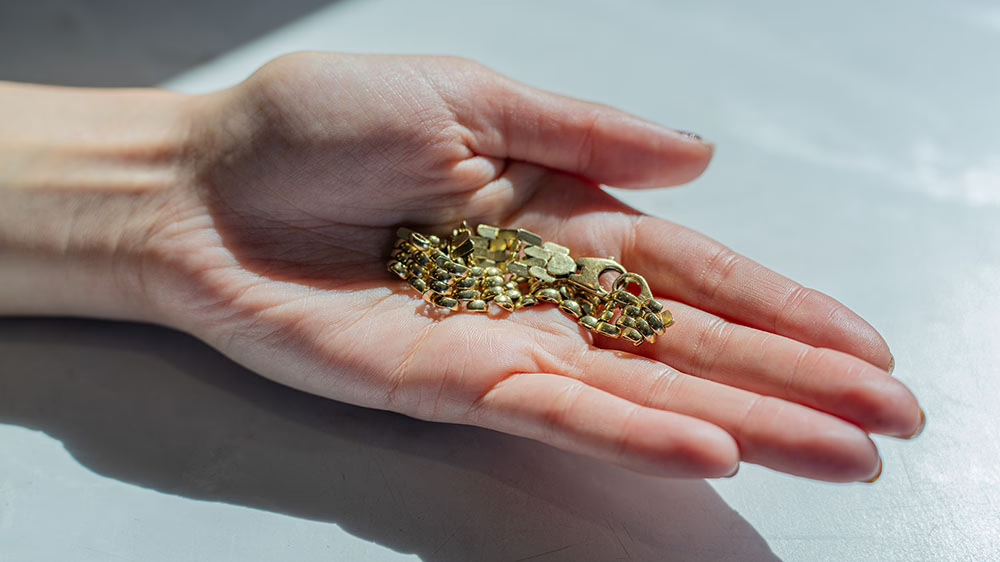
Then the decision is yours: sell everything, a few pieces or nothing at all. There is no obligation to sell. If you do, your receipt lists each carat separately with a total, sent by text and email, and payment goes to your bank account no later than the fifth banking day. We never pay in cash. You can read about each step in what happens during a gold valuation.
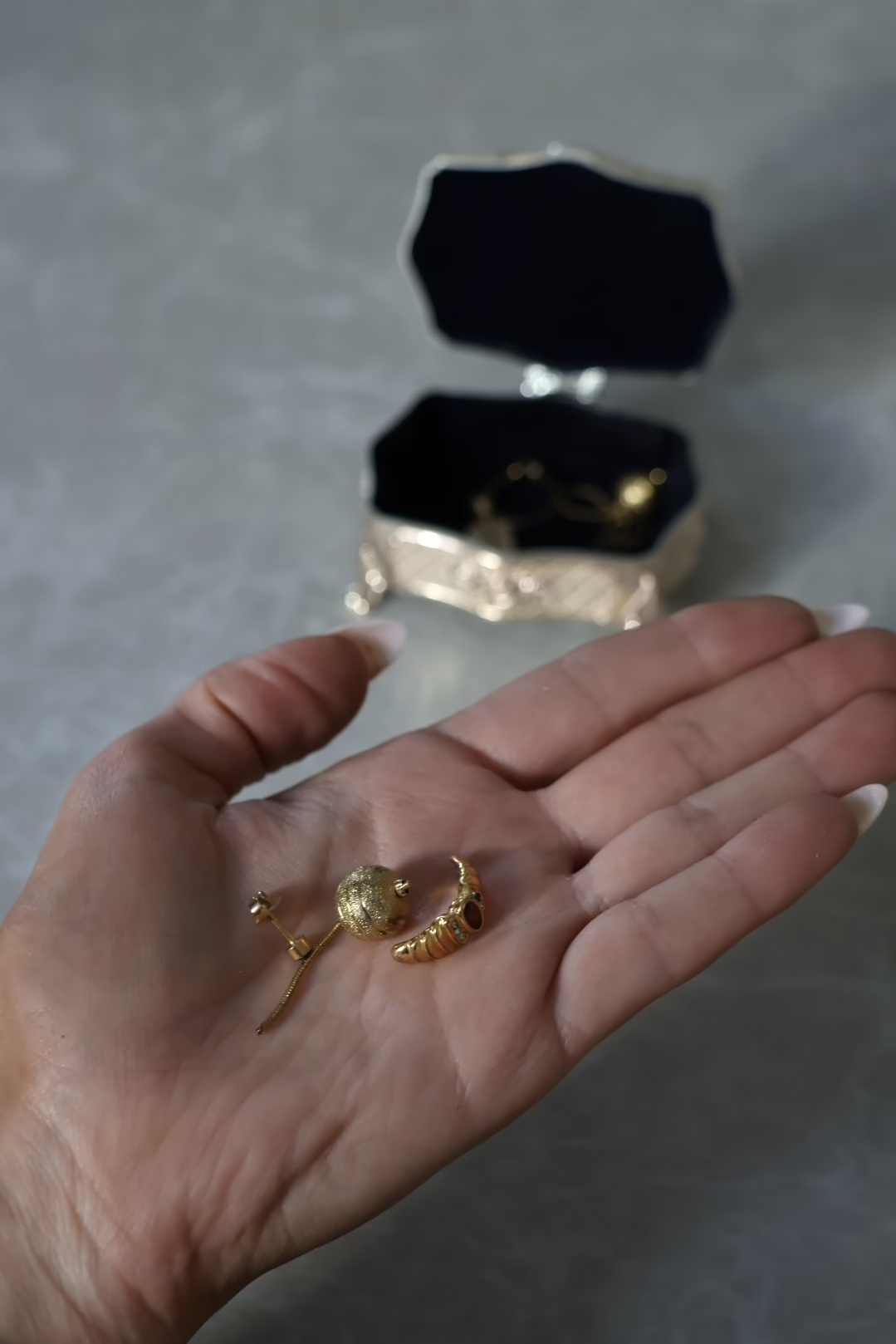
Bring everything. Odd earrings, broken chains and unmarked pieces can all be tested at the same time. If you have coins too, a sovereign is 22ct, so keep it apart from your 9ct jewellery.
9ct gold: frequently asked questions
How much is 9 carat gold per gram?
Its metal value is 37.5 % of the day’s price for a gram of pure gold. At an example price of £100 per gram of pure gold, that’s £37.50 per gram of 9ct.
What is 375 gold worth?
375 is the hallmark for 9ct gold, so it’s worth the same: weight in grams × 0.375 × the price of pure gold per gram.
Is 9k gold the same as 9ct gold?
Yes. “9k” and “9kt” are other ways of writing 9 carat, common on imported jewellery. All mean 37.5 % gold.
Is 9ct gold real gold?
Yes. It’s the lowest standard that can legally be hallmarked as gold in the UK. “9ct bonded” or “gold filled” items are different: only their outer layer is gold.
Is broken 9ct gold worth less?
For its gold value, no. A snapped chain or a dented ring holds the same gold as an undamaged one.
Is rose or white 9ct gold worth less than yellow?
No. All three contain 37.5 % gold, so a gram of each has the same metal value.
Do I need a receipt or box to sell 9ct gold?
No. Your jewellery is valued on its weight and tested gold content. Bring any paperwork if you have it, but it isn’t required.
How quickly am I paid?
Payment goes to your bank account no later than the fifth banking day after the sale. We never pay in cash.
Sources
- GOV.UK: Hallmarking is the law – guidance summary
- The Goldsmiths’ Company Assay Office: Hallmarking guidance notes
- LBMA: LBMA Gold Price
Information checked on 17 November 2026.